Unexplained infertility
Unexplained infertility in Dublin, Ireland
Medically reviewed by Dr. Phil Boyle, MICGP, MRCGP · Last reviewed July 2026
'Unexplained infertility' describes the limits of an investigation, not a distinct diagnosis. At NeoFertility, a full workup finds an underlying cause in the great majority of couples. NeoFertility has published data showing the unexplained label fell from 24% to 1% after the full workup.
A normal semen analysis, a normal ultrasound, a progesterone result above 30. Everything looks fine on paper. But when we go deeper, we can see it jumping off the page where the problem lies.
Those three tests have a clear but limited scope. They identify obvious structural problems, severe male factor, and clear anovulation. They are not the full picture of why a couple is not conceiving.
Unexplained infertility is a label, not a diagnosis. In most cases it means the investigation did not find a cause, not that no cause exists.
In our published cohort (Boyle et al., JRRM 2025), the proportion labelled with unexplained infertility dropped from 24 percent at presentation to 1 percent after a full NeoFertility workup of 187 couples.
Put another way: 23 out of every 24 couples who walked in with that label walked out with a working diagnosis.
If you have been told everything looks normal and you still cannot conceive, you are almost certainly in the 23, not the 1. This is where a thorough women's fertility investigation begins.
What "unexplained" really means
The "unexplained" label describes the limits of an investigation, not a condition.
In standard fertility care, a couple receives a basic hormonal panel, a semen analysis, and sometimes an ultrasound or a tubal patency test. If those come back within range, the working diagnosis becomes unexplained infertility.
Bear in mind: that label is not saying the problem does not exist. It is saying the investigation did not find it.
The standard workup was designed to rule out blocked fallopian tubes, severe male factor, and obvious anovulation. Unexplained infertility is the label that gets applied when the short-form investigation runs out of things to check. It is not a diagnosis of a distinct underlying condition.
A couple carrying that label is not at a diagnostic endpoint. They are at the start of an investigation that has not yet been done completely.
Why unexplained infertility is such a common label
In Dr. Phil Boyle's clinical view, the investigation simply has not been thorough enough.
The standard workup does not assess the “quality of ovulation”. It asks only whether ovulation occurred. It does not fully assess sperm quality. It does not routinely check thyroid and adrenal function, immune markers, food antibodies, clotting factors, or chronic endometritis.
Silent endometriosis, which causes no obvious symptoms, may only be visible with a laparoscopy. And PMOS (previously PCOS) is often sitting behind what another clinic labelled unexplained.
The result is that a couple leaves their standard workup with a negative result and no direction. The investigation looked in a limited number of places. It did not find anything in those places. That is the scope of what a short-form investigation is built to do.
It is the limit of the short-form investigation they were asked to run. And the gap between "we looked here" and "we looked everywhere" is where the diagnosis is.
Unexplained infertility is a label, not a diagnosis.
What a full unexplained infertility workup covers
NeoFertility looks at the quality of ovulation, not just the fact of it. We look at the fertility chart across the whole cycle. We look at the male partner in detail, not just sperm count.
The standard day-21 progesterone test answers one question: did you ovulate? The NeoFertility question is different. It is: was the ovulation of sufficient quality to support a pregnancy? Those are not the same question, and they do not have the same answer.
Progesterone and oestradiol are measured at 7 DPO. The target is a progesterone level above 60 nmol/L and oestradiol above 400 pmol/L.
The conventional day-21 threshold of 30 nmol/L at a fixed calendar date routinely misses poor-quality ovulations, especially in women whose cycles are not exactly 28 days.
When couples labelled unexplained are properly assessed at 7 DPO, approximately eight times out of ten we find suboptimal ovulations. That figure is from Dr. Boyle's clinical experience across more than two decades of practice.
It is not a published paper figure and is not presented as one. It reflects what we see consistently when we apply the correct measurement at the correct time.
It is one of the main reasons the "unexplained" label so often turns into a specific diagnosis at NeoFertility.
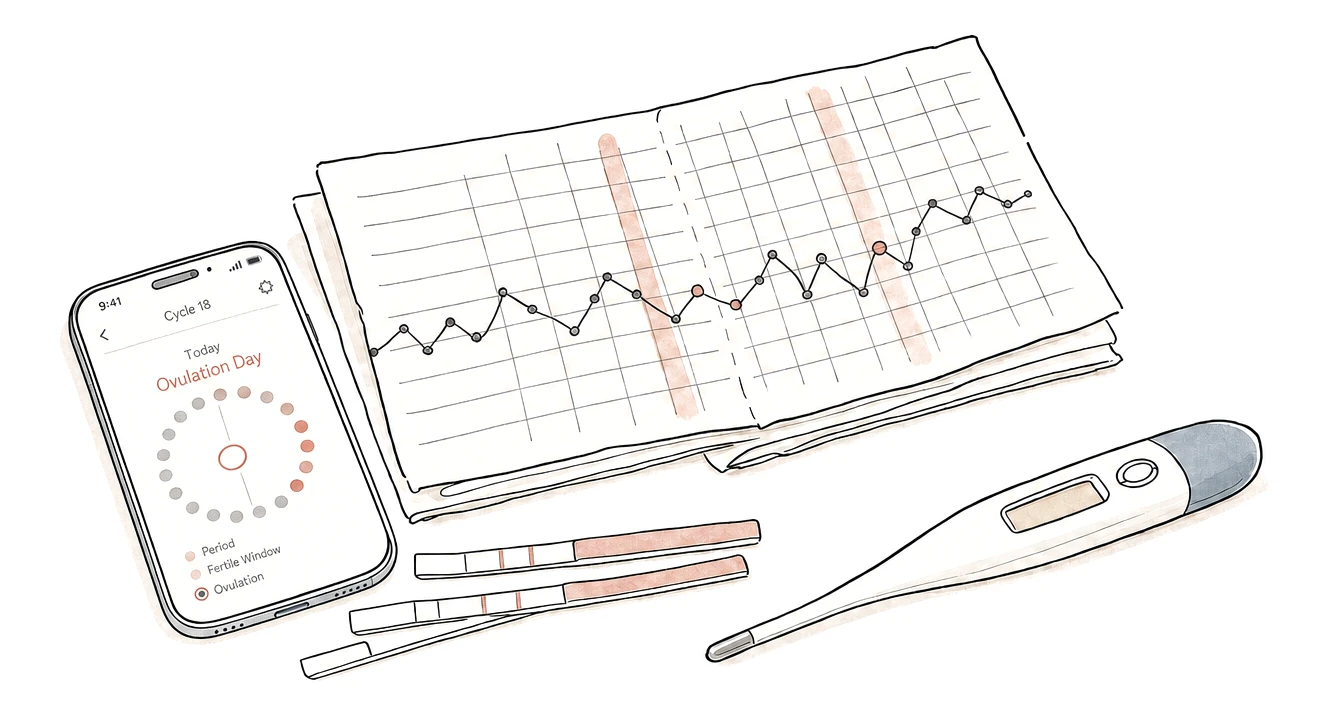
The fertility chart captures what no single blood test can: the mucus pattern across the cycle, the presumed ovulation day, the luteal phase length, and any irregularities in bleeding. We use ChartNeo for charting.
The chart makes it possible to time the bloods correctly. Without a chart, you cannot do a 7 DPO test. Without a 7 DPO test, you cannot assess the quality of ovulation.
And without assessing quality of ovulation, you cannot diagnose the most common finding in couples presenting with impaired fertility.
A full NeoFertility investigation typically includes:
- 7 DPO hormone assessment: progesterone above 60 nmol/L and oestradiol above 400 pmol/L (timed to the fertility chart, not a fixed calendar date)
- Fertility cycle charting via ChartNeo from day one
- Male semen analysis
- Male hormone profile where indicated
- Thyroid and adrenal function
- DHEA and androgen levels
- Microbiome assessment of menstrual and semen samples
- Natural killer cell activity and immune markers
- Food antibodies
- Assessment for clinical endorphin deficiency
- Laparoscopy and hysteroscopy referral for silent endometriosis typically after four balanced cycles without conception
Male factor is identified in approximately 40% of couples with impaired fertility.
See the full treatment plan for the complete three-phase protocol.
What the evidence shows: 24% to 1%
The numbers from NeoFertility's published cohort tell a clear story.
In our published cohort (Boyle et al., JRRM 2025), 24% of the 187 couples arrived carrying an unexplained infertility label. After our full multi-factorial workup, that figure dropped to 1%.
So in 23 out of every 24 couples carrying that label, there was an identifiable cause. It had simply not been looked for.
This is the answer to the question many couples arrive with after years of being told nothing is wrong: yes, there is almost always a reason. See the published results for the full cohort data.
The cohort demographics are worth knowing, because they are probably not far from your own situation. Mean female age was 36.4, average time trying to conceive was 32.2 months, and 19% had prior IVF. These are not easy cases.
These are couples who had already been through the standard pathway, with nothing to show for it.
What the investigation found, in Table 4 of the published paper, tells its own story. Before the NeoFertility workup, corpus luteum deficiency was recorded in 0% of the couples. After full assessment, it was present in 71%.
Clinical endorphin deficiency was recorded in 1% before assessment. This is a symptomatic deficiency of endogenous opioid function that affects immune function and cycle health. After a full workup, 67% of couples showed it. Hypoandrogenism: 0% before, 31% after. Chronic endometritis: 0% before, 17% after.
These are not rare conditions. They are common conditions that a standard investigation does not look for, and therefore does not find.
Bear in mind: these findings did not appear because the NeoFertility workup invented new diagnoses. They appeared because the workup asked questions the standard investigation was not designed to ask. The conditions existed before the couple arrived. They had simply not been found.
Of the 187 couples in that cohort, 52% achieved a clinical pregnancy. The crude live birth rate was 41% (77 couples). The average time to conception for live-birth patients was 12 months.
Unexplained infertility after failed IVF
An IVF cycle does not ask why natural conception failed.
What an IVF cycle tells us and what a restorative investigation tells us are different things. Together, both sets of information are more useful than either alone. IVF addresses the failure to conceive through bypassing the reproductive system.
It is less concerned why the system was not producing a pregnancy.
That distinction matters. The underlying conditions that made natural conception difficult are still present after IVF, whether IVF succeeded or failed. Poor ovulation quality, sperm DNA fragmentation, clinical endorphin deficiency, silent endometriosis: none of these are corrected by an IVF cycle.
Here is a concrete example. During a standard IVF cycle, the luteal phase is supplemented with progesterone as a matter of routine. The quality of a woman's natural luteal phase is never assessed. It is bypassed.
So if corpus luteum deficiency was the central reason she was not conceiving, that reason remains unknown after IVF.
The IVF cycle may have failed because of it, but the record shows only "implantation failure." When she comes to us with that record, we are often the first clinicians to measure her progesterone at 7 DPO. And we can find the answer.
NeoFertility published a peer-reviewed study in Frontiers in Medicine specifically on this group (Boyle et al., Front Med 2018). That cohort was 403 couples with prior failed IVF. Their mean female age was 37.2, and they had averaged 2.1 prior IVF cycles.
The adjusted live birth rate for that cohort was 32.1%.
A single IVF cycle in Ireland typically costs between EUR 5,000 and EUR 8,000. The HFEA reports a live birth rate of 26.4% per treatment cycle for IVF across all age groups (2017 data).
NeoFertility's full treatment plan covers up to 12 balanced cycles and is a fraction of the cost of one IVF cycle.
If you have already done two or three IVF cycles and still have no diagnosis, a restorative investigation is not a step backward. It is the investigation that should have come first.
If you have already been through one or more IVF cycles, see our second-opinion process. Niamh and David's story is one example.
Lynsey and Mick: eighteen years, six miscarriages, one healthy baby
Lynsey and Mick had been trying for eighteen years.
Lynsey had been through six miscarriages. She had been told her case was too complex, then that pregnancy was highly unlikely. She had been told her infertility was unexplained. After the full NeoFertility workup, the causes were treated, and their son Zachariah was born.
Theirs is one of the patient stories we get asked about most often, and it is worth reading in full.
Read Lynsey and Mick's story, or browse all patient stories.
Identifying at-risk cycles before you start trying
You do not need to be struggling for years before a workup is worth doing.
You do not even need to be trying yet. The chart can flag at-risk cycles before you attempt conception. A short luteal phase, poor mucus patterns, irregular cycles, painful periods, or a history of any early pregnancy loss are all signals worth investigating now.
The standard advice for couples who do not conceive in the first year is to keep trying. UK NICE guidelines (NG257, 2017) note that of those who do not conceive in the first year, about half will conceive in the second year without treatment.
That framing is true, and it is also the reason 50% of couples will still not be pregnant after two full years of trying. Waiting another twelve months is the right answer for some couples and a costly mistake for others.
The chart can tell us which group you are in long before the calendar can.
The fertility chart makes this possible. When someone develops their fertility awareness and starts charting, we can often see problems before any blood test is run.
A poor mucus pattern, a short luteal phase, a cycle that suggests the quality of ovulation may be low: these are visible in the chart.
Bear in mind that you do not need to have been trying for a year before a restorative assessment makes clinical sense.
What we've done is build a system that makes it possible to prepare before conception rather than only investigate after it fails. We can lay a foundation: get the hormones into the right range, improve the male picture, address any underlying conditions.
Then give you 12 good cycles with everything in order. That is a fundamentally different approach to waiting 12 months and then asking what went wrong.
Getting started
Your first appointment is a 45-minute consultation with Dr. Phil Boyle or Dr. Agnes Toth.
No GP referral is needed. You self-refer directly. Both partners are asked to attend from day one, because the investigation covers both from the start.
Starting fertility charting with ChartNeo before or alongside your first visit is recommended. This gives the clinic cycle data to work from at the assessment. The sooner the chart is running, the clearer the initial picture.
At the end of the first consultation, the investigation plan is outlined, which takes approximately two months to complete.
NeoFertility's first pregnancy scan is typically scheduled at 7.5 weeks rather than 6, because a scan at 6 weeks can be falsely reassuring.
For pricing, see the pricing page. For the full three-phase treatment structure, see how the treatment plan works.
Frequently asked questions
What does 'unexplained infertility' actually mean?
If you have been handed that label, you probably already know the frustration. You have been told nothing is wrong, and you are still not pregnant.
Unexplained infertility is the diagnostic label given to couples who meet the clinical definition of infertility but whose standard investigation found no cause. That workup typically includes a semen analysis, a basic hormonal panel, and an ultrasound.
What it usually does not include: a properly timed progesterone assessment at 7 days past ovulation (7 DPO), sperm DNA fragmentation testing, thyroid and adrenal function, immune markers, food antibodies, or investigation for silent endometriosis.
Unexplained infertility describes the limits of the investigation, not a distinct underlying condition. When we complete the full NeoFertility workup, a working diagnosis emerges in the great majority of couples.
What will you find that my previous fertility clinic did not?
This is the question we hear most often, and it deserves a specific answer rather than a promise.
The most common gaps are: quality of ovulation, assessed at 7 DPO against a progesterone target of 60 nmol/L and oestradiol target of 400 pmol/L. Most clinics test day 21 at a threshold of 30 nmol/L, which misses poor-quality ovulations.
We also look for sperm DNA fragmentation, silent endometriosis, clinical endorphin deficiency, chronic endometritis, and hypoandrogenism.
In our 2025 published cohort of 187 couples, corpus luteum deficiency was identified in 71% after assessment, clinical endorphin deficiency in 67%, hypoandrogenism in 31%, and chronic endometritis in 17%.
None of those had been picked up before the couples came to us (Boyle et al., JRRM 2025).
Is this worth my time if I have already done IVF?
In many cases, this is not a step backward. The couples who come to us after failed IVF are not starting over. They are asking the question the IVF cycle did not need to ask.
In our 2025 published cohort, 19% of the 187 couples had prior IVF, averaging 2.3 cycles.
We have also published a separate peer-reviewed study of 403 couples who came to us specifically after failed IVF, with an average of 2.1 prior IVF cycles and a mean female age of 37.2 (Boyle et al., Frontiers in Medicine 2018).
The adjusted live birth rate for that cohort was 32.1%.
IVF bypasses the reproductive system to deliver an embryo. It does not investigate why the system was not producing a pregnancy. A restorative investigation after IVF asks the question IVF did not need to ask.
How long does a proper investigation take?
The initial investigation phase takes approximately two months: a first consultation, two to three full charting cycles with ChartNeo, two to three 7 DPO blood draws, semen analysis with DNA fragmentation, and any additional tests the picture indicates.
At the end of that period you have a working diagnosis and a treatment plan. The full treatment plan covers up to 12 balanced cycles, which mirrors the biology.
It is normal for couples to take up to 12 months to conceive once underlying conditions have been addressed.
If you have been trying for years already, two months to get a real answer is not a long time. In the 2025 published cohort, average time to conception for couples who achieved a live birth was 12 months (Boyle et al. 2025).
Do we have to chart? Is that really necessary?
Charting is central to everything we do, and once you start doing it you will probably understand why.
The fertility chart tells us things a single blood test cannot: when ovulation actually occurred, the mucus pattern across the cycle, the length of the luteal phase, and the quality of the cycle as a whole.
We use ChartNeo, which supports multiple charting methods, including Billings, Creighton, Sympto-Thermal, and Marquette.
Charting starts before your first blood test, so the bloods are timed correctly. A blood test that is not timed to the actual ovulation day is often the reason a previous clinic missed the problem.
If you document your fertility signs and bring that chart to us, we can often see the problem long before any blood result confirms it.
What if you don't find anything either?
That outcome is uncommon, and it deserves a direct answer.
In our 2025 published cohort of 187 couples, only 1% remained without a working diagnosis after the full NeoFertility workup. That is approximately two couples out of 187. For that small group, we are honest: we do not invent a diagnosis.
We discuss remaining options, including supported natural conception with close monitoring.
Bear in mind that 23 out of every 24 couples who arrived with the 'unexplained' label left with a working diagnosis and a treatment plan. You are more likely to be in that 23 than in the 1.
Do both partners need to be investigated?
Both partners are investigated from the first appointment, and that means you are not carrying this alone.
Male factor is identified in approximately 40% of couples with impaired fertility. Standard semen analysis counts sperm and assesses motility and morphology, but does not give a complete picture of male fertility.
High DNA fragmentation affects fertilisation and early embryo development and will not appear on a routine sperm count.
Both partners are assessed from day one: hormonal workup and fertility charting for the female partner; semen analysis with DNA fragmentation, male hormones where indicated, and lifestyle assessment for the male partner. Investigating one partner and labelling the result 'unexplained' is not a complete picture.