Hormonal causes of infertility
Hormonal dysfunction treatment in Ireland
Medically reviewed by Dr. Phil Boyle, MICGP, MRCGP · Last reviewed July 2026
Hormonal dysfunction is one of the most common and most frequently missed causes of impaired fertility. Whether ovulation occurs is only part of the picture; the quality of ovulation matters just as much. At NeoFertility, we look at the full hormonal picture across the cycle and treat what we find.
Quality of ovulation: what standard testing misses
Most fertility clinics run a day-21 progesterone test.
That test answers one question: did she ovulate? It does not answer the more important question: did she ovulate well? This is the quality of ovulation.
The quality of ovulation matters as much as whether ovulation occurs at all. NeoFertility approach
So what we look at is progesterone and oestradiol, measured 7 days after the identified peak day of mucus. The target is progesterone above 60 nmol/L and oestradiol above 400 pmol/L.
That progesterone target is twice the threshold many clinics use. If either progesterone or oestradiol falls short, the corpus luteum has not produced the hormonal environment early pregnancy needs.
We can see it jumping off the page where the issue lies. This timing method is the basis for published research co-authored by the NeoFertility team (Abdulla SH, Bouchard TP, Leiva RA, Boyle P et al., Frontiers in Public Health, 2018).

Hormonal conditions NeoFertility treats
Thyroid dysfunction
Thyroid disease is among the most common hormonal conditions in women of reproductive age.
What gets missed more often than overt hypothyroidism is subclinical dysfunction and autoimmune thyroid disease. With autoimmune thyroid disease, the immune system attacks the gland even when hormone levels appear normal.
In Dr. Boyle's clinical experience, thyroid antibodies are associated with higher miscarriage risk, even when TSH readings look normal. Treating autoimmune thyroid disease is part of the clinical assessment where it is present.
A TSH result on its own is not a complete assessment. NeoFertility runs a full thyroid panel including antibody testing as part of the standard workup.
DHEA deficiency
DHEA, or dehydroepiandrosterone, is a mouthful, but it is simply an adrenal precursor to sex hormones including oestradiol and progesterone.
DHEA declines with advancing age and is further depleted by chronic stress and poor sleep. When DHEA is low, the hormonal environment of the cycle suffers.
We test DHEA and total testosterone with SHBG as part of the standard workup and supplement before conception when levels are low.
NeoFertility's published research showed a significant reduction in miscarriage rate with DHEA supplementation in women with low serum oestradiol (Boyle P et al., Frontiers in Reproductive Health, 2024). In that cohort, DHEA treatment reduced the miscarriage rate from 45.5% to 17.5% (p=0.038).
Hyperprolactinemia and anovulation
Elevated prolactin suppresses the pituitary signals that drive ovulation.
It can result from a small benign growth on the pituitary gland, from certain medications, or from thyroid dysfunction. Prolactin is measured as part of the standard panel, and elevated levels are treated appropriately.
PMOS/PCOS is the most common cause of anovulation and has its own dedicated page.

Treatment for hormonal imbalance
Treatment is multi-factorial because the combinations vary between couples.
Depending on the assessment, it may include progesterone and oestradiol support in the luteal phase, timed to the individual cycle. It may also include thyroid treatment where antibodies are elevated, DHEA supplementation where testing shows deficiency, and prolactin management where elevated prolactin is confirmed.
Low Dose Naltrexone has an endorphin boosting effect that supports the hormonal cycle more broadly. It is part of the treatment plan for most couples. In NeoFertility's 2025 published cohort (Boyle et al. 2025, JRRM), 71% of all couples received LDN as part of their treatment.
The goal is to boost and balance your cycle: to get it producing the hormonal output it should be producing, measured in real time, over several cycles. Treatment is a process over time.
Related conditions
Hormonal dysfunction rarely exists on its own.
See our pages on PMOS/PCOS, endometriosis, PMS/PMDD, postnatal depression, and recurrent miscarriage. The progesterone patterns that drive poor cycle quality are often the same patterns behind other reproductive health symptoms.
Getting started
You do not need a GP referral.
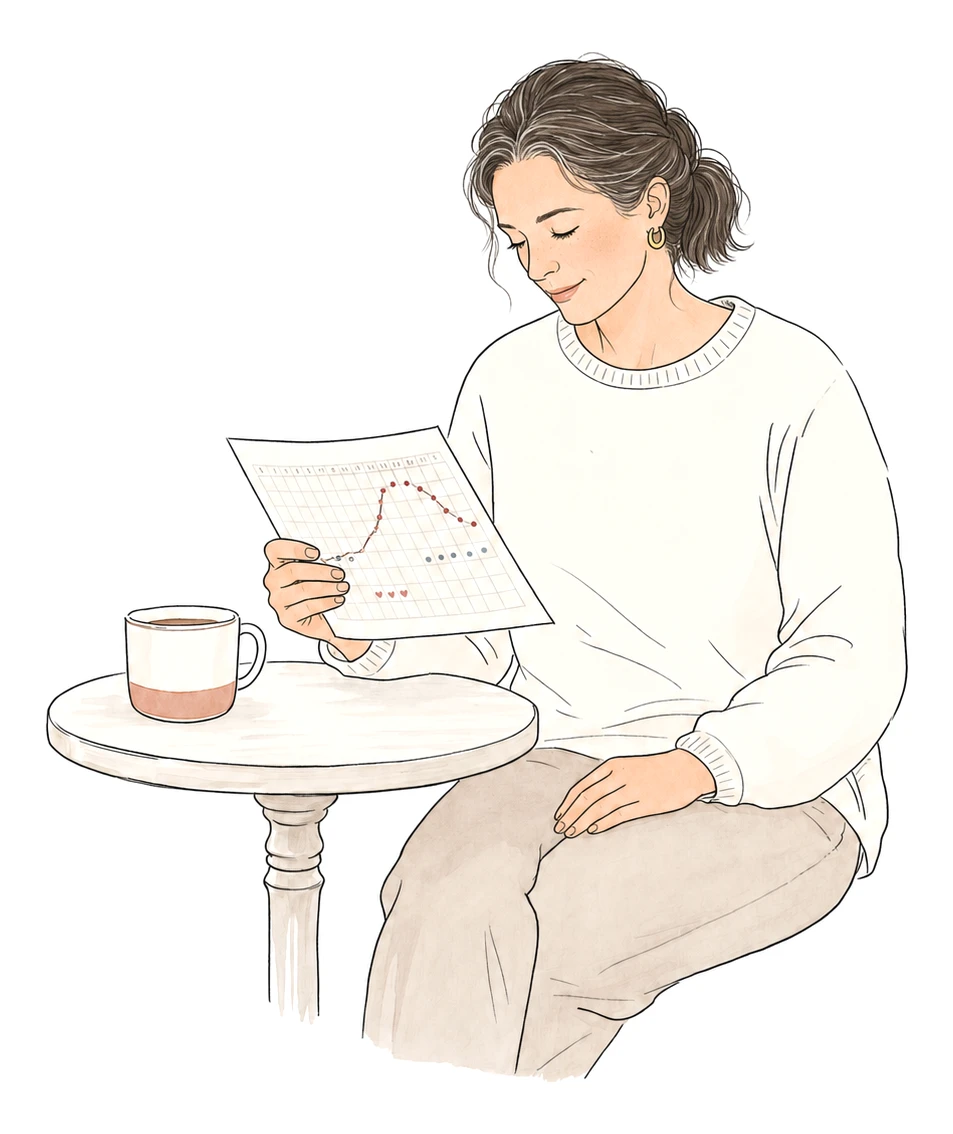
Your first consultation is 45 minutes with Dr. Boyle or Dr. Toth. We ask that you begin charting with ChartNeo before your first appointment where possible, so we have cycle data to review from day one.
How our full treatment plan works
Frequently asked questions
What is a luteal phase defect?
The luteal phase is the second half of your cycle, after ovulation, when progesterone rises to prepare the uterine lining for a pregnancy.
A luteal phase defect means progesterone does not rise to the level early pregnancy needs. The standard day-21 test only asks whether you ovulated, not how well.
We use a timed blood test at 7 days post-ovulation, where we look for progesterone above 60 nmol/L. That is twice the threshold many clinics use.
In Dr. Boyle's clinical experience, most couples with impaired fertility show suboptimal readings on this test, even when their day-21 result looked normal.
Can thyroid problems cause infertility?
In many cases, yes. Even mild thyroid dysfunction can interfere with ovulation and raise the risk of miscarriage.
Autoimmune thyroid disease, where antibodies attack the thyroid gland, is especially relevant in women with recurrent miscarriage. In Dr. Boyle's clinical experience, antibodies can be present even when TSH levels look normal.
A TSH result on its own is not a complete thyroid assessment. We run a full thyroid panel including antibody testing as part of our standard workup.
What hormones does NeoFertility test?
We test across the full cycle, not on a single day. Our standard panel includes LH, FSH, oestradiol, progesterone, thyroid function (TSH, free T3, free T4, thyroid antibodies), DHEA, prolactin, Testosterone and SHBG.
Timing matters. We draw progesterone and oestradiol at 7 days after the identified peak day of mucus. That is when both hormones should be at their highest.
This gives us a real picture of how well the corpus luteum is working, not just whether it showed up.
How does NeoFertility treat hormonal imbalance differently?
The standard approach tends to bypass hormonal imbalance with stimulation drugs, or to proceed directly to IVF. We work differently.
So what we do is identify where the hormonal system is failing and correct it with targeted prescriptions. If progesterone is low, we support it in the luteal phase. If thyroid antibodies are elevated, we treat that. If DHEA is depleted, we replace it.
It is a multi-factorial approach built around restoring your own cycle rather than overriding it.
Bear in mind, treatment is a process over time, not a one-cycle fix.